


How can we help you?

Following the Paris Agreement and increasing global efforts to reduce greenhouse gas emissions, the maritime industry has committed to improving its environmental performance.
The International Maritime Organization (IMO) has adopted targets including a reduction in carbon intensity, aiming to reduce CO₂ emissions per transport work by at least 40% by 2030 compared to 2008 levels, while also pursuing broader greenhouse gas reduction objectives as part of its long-term decarbonisation strategy.
Latest carbon intensity and energy effeciency measures outlined by the International Maritime Organization (IMO) agreed back in July 2021, effective start of 2023, are designed to deliver these emission reduction targets.
Recent years have witnessed a significant cost increase in traditional fuels and the new electrofuels being introduced will be very costly for the foreseeable future.
The demands for efficiency have never been greater on those who own, operate and build Commercial Marine vessels. You are tasked with reducing costs while maintaining performance, crew safety and compliance with environmental regulations.
To help address these challenges, Frese has developed the Frese FUELSAVE® System to improve energy efficiency in vessel water cooling systems.
By reducing unnecessary flow and supporting optimised pump operation, the system is designed to lower energy consumption, which may contribute to fuel savings and associated CO₂ emission reductions under defined operating conditions.
We call this patent pending solution the Frese FUELSAVE® System – with a return of investment under two years.
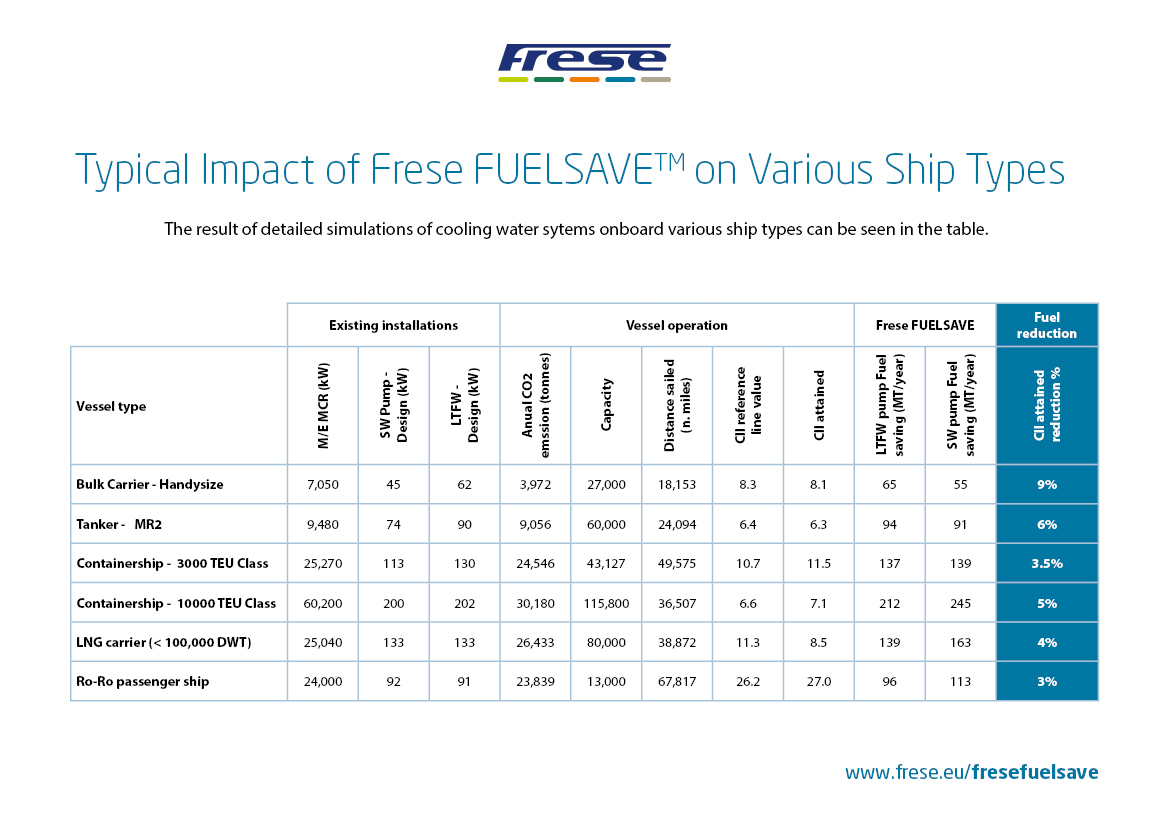
The result of detailed simulations of cooling water sytems onboard various ship types can be seen in the table. Click to zoom.
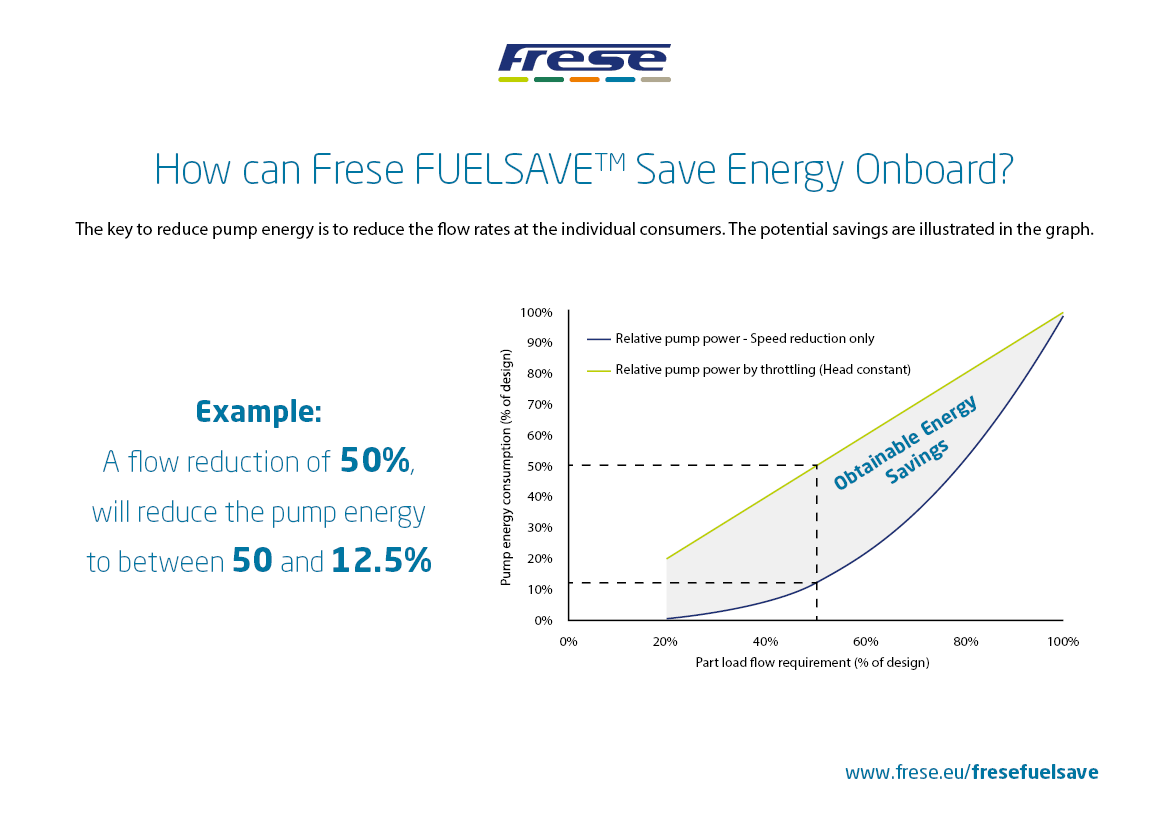
The key to reduce pump energy is to reduce the flow rates at the individual consumers. The potential savings are illustrated in the graph. Click to zoom.
Example:
A flow reduction of 50%, will reduce the pump energy to between 50 and 12.5%